Can a 120v Macerator Pump be used in a solar - powered system?
Leave a message

Hey there! As a supplier of 120v Macerator Pumps, I often get asked if these pumps can be used in a solar - powered system. It's a great question, and today, I'm gonna break it down for you.
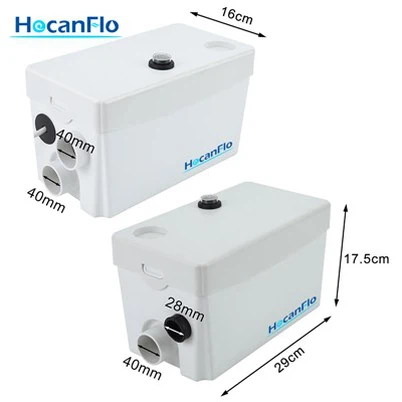
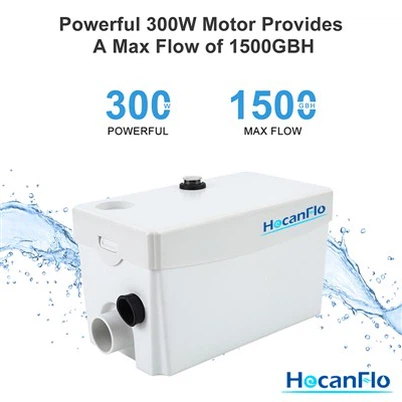
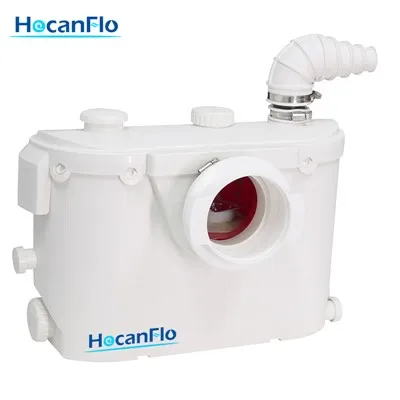
First off, let's understand what a 120v Macerator Pump is. These pumps are designed to grind up waste and pump it out, usually in situations where gravity - fed drainage isn't an option. They're commonly used in basements, mobile homes, and other places where you need to move sewage or greywater. You can check out our 500w Small Bathroom Macerator Toilet Pump for a great example of what these pumps can do.
Now, let's talk about solar - powered systems. Solar power is all about converting sunlight into electricity using solar panels. It's a clean and renewable energy source that's becoming more and more popular. A solar - powered system typically consists of solar panels, a charge controller, a battery bank, and an inverter. The solar panels collect sunlight and convert it into DC (direct current) electricity. The charge controller regulates the flow of electricity to the battery bank, which stores the energy. The inverter then converts the DC electricity from the battery bank into AC (alternating current) electricity, which is what most household appliances use.
So, can a 120v Macerator Pump be used in a solar - powered system? The short answer is yes, but there are a few things you need to consider.
Power Requirements
The first thing you need to look at is the power requirements of the 120v Macerator Pump. These pumps usually have a certain wattage rating. For instance, our 500w Macerator Toilet Pump has a power rating of 500 watts. You need to make sure that your solar - powered system can supply enough power to run the pump.
To calculate the power your solar system needs to generate, you'll need to know how often the pump runs and for how long. Let's say your pump runs for 10 minutes a day. If it's a 500 - watt pump, then it uses 500 watts x (10/60) hours = 83.33 watt - hours of energy per day. You'll need to size your solar panels, battery bank, and inverter accordingly to meet this demand.
Battery Storage
Battery storage is crucial in a solar - powered system, especially when using a 120v Macerator Pump. The pump might need to run at night or on cloudy days when the solar panels aren't generating electricity. So, you need to have enough battery capacity to store the energy needed to run the pump during these times.
A good rule of thumb is to have a battery bank that can store at least three days' worth of energy for the pump. If your pump uses 83.33 watt - hours per day, then you'll need a battery bank with a capacity of at least 250 watt - hours. However, you also need to consider the efficiency of the battery and the inverter, as some energy will be lost during the charging and discharging process.
Inverter Sizing
The inverter in your solar - powered system is responsible for converting the DC electricity from the battery bank into 120v AC electricity that the Macerator Pump can use. You need to make sure that the inverter is sized correctly to handle the power requirements of the pump.


If your pump has a starting surge (which many pumps do), the inverter needs to be able to handle this surge. The starting surge can be two to three times the normal running wattage of the pump. So, if your 500 - watt pump has a starting surge of 1500 watts, you'll need an inverter that can handle at least 1500 watts.
Compatibility
Another thing to consider is the compatibility between the 120v Macerator Pump and the solar - powered system. Some pumps might have built - in electronics that could be sensitive to the quality of the electricity supplied by the inverter. You need to make sure that the inverter can produce a clean and stable 120v AC output.
Also, check if the pump has any special requirements, such as a specific frequency or voltage tolerance. If the inverter doesn't meet these requirements, it could cause problems with the pump's operation or even damage the pump.
Advantages of Using a 120v Macerator Pump in a Solar - Powered System
There are several advantages to using a 120v Macerator Pump in a solar - powered system. First of all, it's environmentally friendly. Solar power is a clean energy source, so using it to run your pump reduces your carbon footprint.
Secondly, it can save you money in the long run. Once you've installed the solar - powered system, the cost of generating electricity is essentially free. You won't have to pay for the electricity used by the pump, which can add up over time.
Challenges and Solutions
Of course, there are also some challenges when using a 120v Macerator Pump in a solar - powered system. One of the main challenges is the initial cost of setting up the solar - powered system. Solar panels, charge controllers, battery banks, and inverters can be expensive. However, there are often government incentives and rebates available to help offset these costs.
Another challenge is the maintenance of the solar - powered system. The solar panels need to be kept clean and free of debris to ensure maximum efficiency. The battery bank also needs to be maintained properly to ensure a long lifespan.
To overcome these challenges, you can do some research to find the most cost - effective solar components. You can also hire a professional to install and maintain the solar - powered system.
In conclusion, a 120v Macerator Pump can definitely be used in a solar - powered system, but you need to carefully consider the power requirements, battery storage, inverter sizing, and compatibility. If you're interested in our range of 120v Macerator Pumps, including the 220v Macerator Pump which might also be suitable for some setups, and want to discuss how they can work with a solar - powered system, don't hesitate to reach out for a procurement discussion. We're here to help you find the best solution for your needs.
References
- "Solar Power Systems: Design and Installation Guide" by Tom Markvart
- "Pump Handbook" by Igor J. Karassik