

How are commercial toilets different from residential toilets?
Leave a message

Hey there! As a toilet supplier, I've seen firsthand the differences between commercial toilets and residential toilets. It's not just about the looks; there are some key distinctions that can really impact your choice, whether you're outfitting a home or a business.
Let's start with the durability factor. Commercial toilets are built like tanks. They're designed to withstand heavy use, day in and day out. Think about it – in a public restroom, hundreds of people might use the toilet in a single day. That's a lot of flushing, sitting, and general wear and tear. So, commercial toilets are made with stronger materials. The bowls are usually thicker, and the fixtures are more robust. They're less likely to crack or break, even under constant pressure.

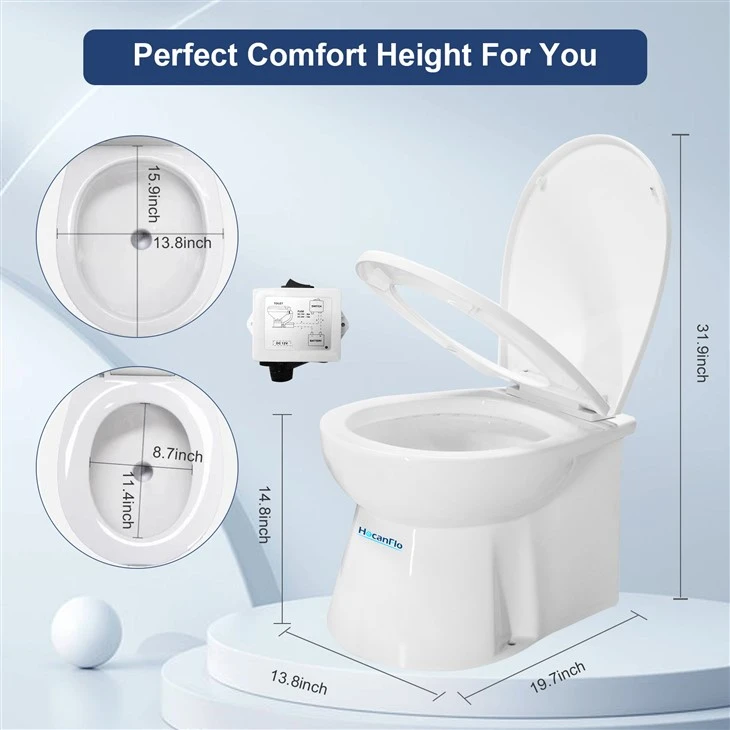
On the other hand, residential toilets are made for a much smaller scale of use. In a typical home, maybe 2 - 5 people are using the toilet regularly. So, the materials can be a bit more lightweight. That doesn't mean they're flimsy, but they're not engineered to handle the same level of abuse as commercial ones. For example, the porcelain on a residential toilet might be a bit thinner, which can save on cost but also means it might be more prone to damage if something heavy is dropped on it.
Another big difference is the flushing power. Commercial toilets need to have a strong flush because they often deal with larger amounts of waste at once. Public restrooms don't have the luxury of people being super careful about what they put in the toilet. So, these toilets are equipped with high - efficiency flush systems that can quickly and effectively clear the bowl. Many commercial toilets use a larger volume of water per flush to ensure everything gets pushed through the pipes.
Residential toilets, however, are more focused on water conservation. With the increasing concern for the environment and rising water bills, most modern home toilets are designed to use less water per flush. There are different types of residential flush systems, like the gravity - fed and pressure - assisted ones. Gravity - fed toilets are the more traditional type, using the force of gravity to move water through the bowl. Pressure - assisted toilets, on the other hand, use compressed air to give the flush an extra boost, which can be more effective while still using less water.
When it comes to design, commercial and residential toilets also have their own aesthetics. Commercial toilets are usually more utilitarian. They're designed to be functional and easy to clean. You'll often see them in simple, no - frills designs. The color choices are also more limited, usually sticking to white or maybe a light gray. This is because these toilets need to be easy to sanitize, and lighter colors make it easier to spot dirt and stains.
Residential toilets, on the other hand, come in a wide range of styles and colors. You can find toilets with sleek, modern designs, or ones that have a more traditional, vintage look. Homeowners often want their toilets to match the overall decor of their bathrooms. So, there are all sorts of options available, from different shapes of bowls to various types of handles and fixtures.
Now, let's talk about some specific types of toilets that might fall into different categories. If you're looking for a toilet for an RV, check out our Rv Macerator Toilet. RV toilets need to be compact and efficient because space is limited in an RV. The macerator function helps to break down waste into smaller pieces, making it easier to pump out and manage.
For boats, especially small ones, our Small Boat Toilet is a great option. These toilets are designed to be small and lightweight, and they need to work well in a marine environment. They often have special features to deal with the rocking and movement of the boat.
If you have a marine application that requires a 12 - volt power source, our 12v Macerator Toilet is a top choice. It uses a 12 - volt system, which is common on boats, and the macerator helps with waste management.
Cost is also a significant factor when comparing commercial and residential toilets. Commercial toilets are generally more expensive. This is because of the high - quality materials, the advanced flush systems, and the durability they offer. But when you consider the long - term use and the fact that you won't have to replace them as often, they can be a good investment for a business.
Residential toilets, on the other hand, come in a wide range of prices. You can find basic, budget - friendly models for a few hundred dollars, or you can splurge on high - end, luxury toilets that cost thousands. It really depends on your needs and your budget.
Maintenance is another area where these two types of toilets differ. Commercial toilets need regular and thorough maintenance. Since they're used so frequently, they can get clogged more easily, and the parts can wear out faster. A commercial cleaning crew or maintenance staff usually has a set schedule for checking and servicing the toilets. This might include cleaning the bowls, checking the flush valves, and making sure the pipes are clear.
Residential toilets also need maintenance, but it's usually less frequent. Homeowners might need to clean the toilet regularly, and every now and then, they might have to deal with a clog. But overall, the maintenance requirements are not as intensive as those for commercial toilets.
In conclusion, whether you're in the market for a commercial or residential toilet, it's important to understand these differences. As a toilet supplier, I'm here to help you make the right choice for your specific needs. If you're a business owner looking for a durable, high - performing toilet, or a homeowner wanting a stylish and efficient one, I've got you covered.
If you're interested in purchasing any of our toilets or have questions about which one is right for you, don't hesitate to reach out. We can have a chat about your requirements and find the perfect toilet solution for you. Let's work together to get your place equipped with the best toilets on the market!
References
Building codes and standards related to commercial and residential plumbing
Industry research on toilet usage and design trends


