What is the difference between a regular pump and a Kitchen Macerator Pump?
Leave a message

When it comes to managing waste and water flow in a kitchen or other areas, pumps play a crucial role. Two common types of pumps used in different scenarios are regular pumps and kitchen macerator pumps. As a supplier of [Kitchen Macerator Pump], I have in - depth knowledge about these two types of pumps, and in this blog, I will explain their differences in detail.
Basic Definition and Function
A regular pump is a general - purpose device used to move liquids from one place to another. It operates by creating pressure to transfer fluids, often from a lower level to a higher one or from a source to a destination. Regular pumps can be found in a variety of applications, such as moving water from a well to a storage tank, circulating water in a heating system, or draining water from a flooded basement. They are mainly designed for relatively clean and homogeneous liquids.
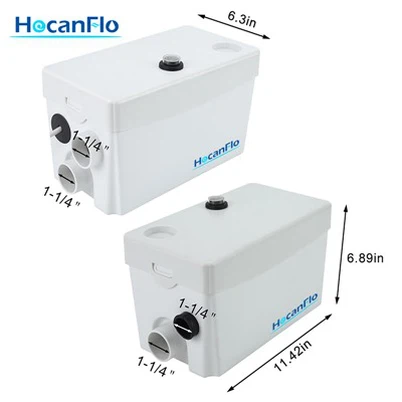
On the other hand, a [The Macerator Pump For Kitchen] is a specialized pump specifically designed for use in kitchens or areas where solid waste may mix with liquids. The main function of a kitchen macerator pump is not only to move the liquid but also to break down solid materials into fine particles. Kitchen waste can include food scraps, coffee grounds, small pieces of paper, and other debris. The macerator pump has a cutting mechanism that grinds these solids into a slurry, which can then be easily pumped out of the kitchen drain system.
Structural Design Differences
Regular pumps typically have a simpler structure. They usually consist of an impeller, a motor, and a casing. The impeller rotates when power is supplied to the motor, creating a centrifugal force that draws the liquid into the pump and then pushes it out through the outlet. The interior of a regular pump is relatively smooth, and there are no additional components for dealing with solid waste.
In contrast, a kitchen macerator pump has a more complex design. In addition to the basic impeller, motor, and casing, it is equipped with a macerating chamber. Inside the macerating chamber, there are sharp blades or cutters. As the waste - liquid mixture enters the pump, the cutters start to rotate at high speed, shredding the solid materials into small pieces. This design ensures that the pump can handle a wider range of waste materials without getting clogged.
Performance in Different Environments
Liquid Compatibility
Regular pumps work best with clean or slightly dirty liquids. If the liquid contains large solid particles, it can cause the impeller to jam or the pump to become damaged. For example, in a water treatment plant, regular pumps are used to transfer pre - filtered water. Any solid debris in the water can quickly wear out the pump components, reducing its efficiency and lifespan.
Kitchen macerator pumps, however, are specifically engineered to handle liquids with solid waste. In a kitchen environment, where food waste is constantly being washed down the drain, a macerator pump can break down these solids and pump them out without any issues. This makes it an ideal choice for kitchens in homes, restaurants, and other food - serving establishments.
Head and Flow Rate
Head refers to the height that a pump can lift the liquid, and the flow rate is the volume of liquid the pump can move per unit of time. Regular pumps can be designed to achieve high heads and flow rates, especially in industrial applications. For instance, large - scale water supply pumps can lift water to great heights and distribute it over a large area at a high flow rate.
Kitchen macerator pumps usually have lower head and flow rate requirements. Since they are mainly used for draining waste from a kitchen sink or small cooking area, the distances and volumes involved are relatively small. However, they need to be able to handle the intermittent inflow of waste - filled liquid, which is different from the continuous flow requirements of many regular pumps.
Installation and Maintenance
Installation
Regular pumps are generally easier to install. They usually only need to be connected to the liquid source and the destination pipe. The installation process mainly involves ensuring a proper seal and electrical connection. In some cases, installing a regular pump may only require basic plumbing skills.
Installing a kitchen macerator pump is a bit more complex. In addition to the basic plumbing connections, the macerator pump needs to be properly positioned to receive the waste - liquid mixture from the kitchen drain. The electrical installation also needs to meet safety standards, as the pump is often installed in a wet environment. Moreover, it is important to ensure that the macerating chamber is accessible for future maintenance.
Maintenance
The maintenance of regular pumps is relatively straightforward. It mainly involves checking the impeller for wear and tear, lubricating the motor bearings, and ensuring that the electrical connections are secure. In most cases, regular pumps can operate for a long time with minimal maintenance.
Kitchen macerator pumps require more frequent maintenance. The cutters in the macerating chamber can become dull over time and need to be sharpened or replaced. The pump also needs to be cleaned regularly to prevent the accumulation of debris, which can affect its performance. Additionally, the seals around the macerating chamber need to be inspected to prevent leaks.
Cost Considerations
Initial Purchase Cost
Regular pumps generally have a lower initial purchase cost, especially for small - scale and general - purpose models. The simple design and mass - production of regular pumps make them more affordable for most consumers.
Kitchen macerator pumps are usually more expensive. The additional cost is mainly due to their complex design, the inclusion of the macerating mechanism, and the need for more durable materials to withstand the harsh environment of a kitchen.
Long - term Operating Cost
The long - term operating cost of regular pumps is relatively low. They consume less energy in most cases, and the maintenance cost is also minimal.


For kitchen macerator pumps, the long - term operating cost can be higher. The energy consumption may be slightly higher due to the operation of the macerating mechanism. Moreover, the more frequent maintenance and replacement of parts can add to the overall cost.
Our Product Offerings
As a supplier of kitchen macerator pumps, we offer a wide range of high - quality products. Our [300w Bathroom Macerator Pump] is not only suitable for bathrooms but can also be used in some small - scale kitchen applications. With a 300 - watt power, it provides sufficient power to break down solid waste and pump it out efficiently.
Our [3 Inlets Sanitary Shower Macerator Pump] is designed with multiple inlets, which can be very useful in a kitchen where there may be multiple sources of waste - water, such as the sink, dishwasher, and garbage disposal.
The [Automatic Macerating Pump] is a smart choice for modern kitchens. It can automatically start and stop according to the water level, providing convenience and energy - efficiency.
Our [300w Sewage Macerator Pump] is a heavy - duty option that can handle large amounts of solid waste in the kitchen. It is built with high - quality materials to ensure long - term reliability.
Conclusion
In summary, the differences between a regular pump and a kitchen macerator pump are significant in terms of design, function, performance, installation, maintenance, and cost. While regular pumps are suitable for clean - liquid applications, kitchen macerator pumps are essential for managing waste - filled liquids in a kitchen environment.
If you are in the market for a kitchen macerator pump, we are here to provide you with the best products and solutions. Our team of experts can help you choose the most suitable pump for your specific needs. Contact us for more information and to start a procurement discussion. We look forward to working with you to solve your kitchen waste management problems.
References
- "Pump Handbook" by Igor J. Karassik, Joseph P. Messina, Paul Cooper, and Charles C. Heald.
- "Wastewater Engineering: Treatment and Reuse" by George Tchobanoglous, Franklin L. Burton, and H. David Stensel.