What is the cavitation resistance of a 220v Macerator Pump?
Leave a message

As a supplier of 220v Macerator Pumps, I am often asked about the cavitation resistance of our products. Cavitation is a phenomenon that can significantly affect the performance and lifespan of a pump, so it's crucial to understand how our 220v Macerator Pumps handle this issue.
Understanding Cavitation
Cavitation occurs when the pressure of a liquid in a pump drops below its vapor pressure, causing the formation of vapor bubbles. These bubbles then collapse when they reach a region of higher pressure, creating shockwaves that can damage the pump's components. The effects of cavitation can range from minor pitting on the impeller and other internal parts to more severe damage that can lead to pump failure.
There are two main types of cavitation: suction cavitation and discharge cavitation. Suction cavitation happens when the pressure at the pump's inlet is too low, while discharge cavitation occurs when the pressure at the pump's outlet is too high. Both types can cause problems for the pump, but suction cavitation is more common in Macerator Pumps.
Cavitation Resistance in 220v Macerator Pumps
Our 220v Macerator Pumps are designed with several features to enhance their cavitation resistance. One of the key factors is the impeller design. The impellers in our pumps are carefully engineered to minimize the pressure drop across the pump, reducing the likelihood of vapor bubble formation. They are also made from high - quality materials that can withstand the impact of collapsing bubbles.


The pump's housing is another important component. It is designed to provide a smooth flow path for the liquid, which helps to maintain a consistent pressure throughout the pump. This reduces the chances of pressure fluctuations that could lead to cavitation. Additionally, the housing is made from durable materials that can resist the erosive effects of cavitation.
The flow rate and head of the pump also play a role in cavitation resistance. Our 220v Macerator Pumps are rated for specific flow rates and heads, and operating the pump within these parameters is essential for optimal performance. If the pump is operated at a flow rate that is too high or too low, it can increase the risk of cavitation.
Importance of Cavitation Resistance in Macerator Pumps
In a Macerator Pump, cavitation resistance is particularly important due to the nature of the fluids they handle. Macerator Pumps are often used to pump wastewater, which can contain solid particles and debris. Cavitation can cause these particles to become more abrasive, accelerating the wear and tear on the pump's components.
Moreover, Macerator Pumps are typically installed in areas where maintenance can be challenging, such as under bathrooms or in basements. A pump that is prone to cavitation may require more frequent maintenance and replacement of parts, which can be costly and inconvenient for the user. By ensuring high cavitation resistance, our 220v Macerator Pumps can provide reliable and long - lasting performance.
Testing and Quality Assurance
To ensure the cavitation resistance of our 220v Macerator Pumps, we conduct rigorous testing during the manufacturing process. Our pumps are tested under various conditions to simulate real - world scenarios and to verify their performance. We measure the pressure, flow rate, and temperature of the pump during testing to ensure that it operates within the specified parameters.
We also use advanced diagnostic tools to detect any signs of cavitation. For example, we can use vibration analysis to detect the characteristic vibrations caused by collapsing bubbles. If any issues are detected during testing, the pump is adjusted or repaired to meet our quality standards.
Applications of 220v Macerator Pumps
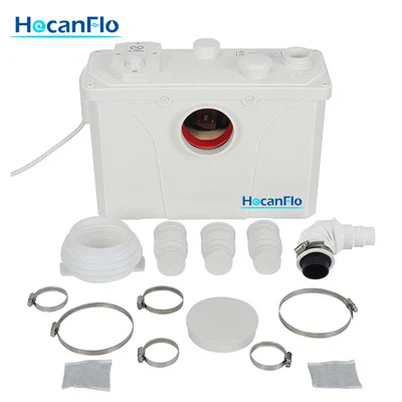
Our 220v Macerator Pumps are suitable for a wide range of applications. They are commonly used in residential and commercial buildings for wastewater disposal. For example, in a residential bathroom, a Full Bathroom Macerator Pump can be used to pump wastewater from toilets, sinks, and showers to the main sewer line.
In commercial settings, such as restaurants and hotels, Sanitary Macerator Pump can handle larger volumes of wastewater. These pumps are designed to macerate solid waste into smaller particles, making it easier to pump and reducing the risk of blockages.
The 500w Macerator Lifting Pump is another popular option. It is capable of lifting wastewater to higher elevations, which is useful in buildings with basements or in areas where the sewer line is located at a higher level.
Contact for Purchase and Consultation
If you are interested in our 220v Macerator Pumps, we invite you to contact us for more information. Whether you are a contractor, a building owner, or a facility manager, our team of experts can help you select the right pump for your specific needs. We can also provide technical support and advice on installation, operation, and maintenance.
We understand that every project is unique, and we are committed to providing customized solutions. By choosing our 220v Macerator Pumps, you can benefit from their high cavitation resistance, reliable performance, and long - term durability. So, don't hesitate to reach out to us and start the conversation about your pumping requirements.
References
- "Pump Handbook" by Igor J. Karassik, Joseph P. Messina, Paul Cooper, and Charles C. Heald.
- "Cavitation in Pumps: Causes, Effects, and Prevention" - Technical paper from the American Society of Mechanical Engineers (ASME).