What is the flow rate adjustment range of a house macerator pump?
Leave a message

Hey there! As a supplier of house macerator pumps, I often get asked about the flow rate adjustment range of these pumps. It's a crucial aspect that can make or break the efficiency of your sewage disposal system at home. So, let's dive right in and explore what this flow rate adjustment range is all about.
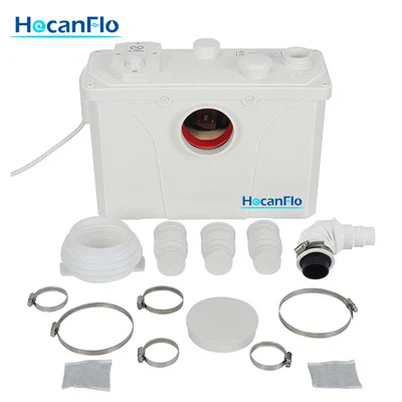
First off, what exactly is a house macerator pump? Well, it's a device designed to break down solid waste into smaller particles and then pump it out of your home's plumbing system. This is especially useful in areas where gravity drainage isn't possible, like basements or small bathrooms. You can check out our 300w Sewage Macerating Pump which is a popular choice for many homeowners.
Now, onto the flow rate adjustment range. The flow rate of a pump refers to the volume of fluid it can move in a given amount of time, usually measured in gallons per minute (GPM) or liters per minute (LPM). The adjustment range is the span between the minimum and maximum flow rates that the pump can achieve.


Why is the flow rate adjustment range important? Well, different applications require different flow rates. For example, a Small Bathroom Macerator Sewage Pump may not need to handle as large a volume of waste as a Basement Sewage Macerator Pump. In a small bathroom, the flow rate can be relatively low because there's less waste being generated at once. On the other hand, a basement might have multiple sources of waste, like a laundry area or a guest bathroom, so a higher flow rate is needed.
The adjustment range allows you to customize the pump's performance according to your specific needs. If you have a low - usage area, you can set the pump to a lower flow rate, which can save energy and reduce wear and tear on the pump. Conversely, during periods of high usage, you can increase the flow rate to ensure that all the waste is properly pumped out.
Most house macerator pumps on the market have a flow rate adjustment range that can vary quite a bit. For smaller, more basic models, the range might be from around 5 GPM (18.9 LPM) to 15 GPM (56.8 LPM). These pumps are usually suitable for small bathrooms or single - use areas.
Medium - sized pumps, which are often used in basements or for multiple fixtures, can have a flow rate adjustment range of 10 GPM (37.9 LPM) to 30 GPM (113.6 LPM). These pumps can handle a moderate amount of waste and are a good choice for average - sized homes.
For larger commercial or high - demand residential applications, there are pumps with even wider flow rate adjustment ranges. Some of these pumps can go from 20 GPM (75.7 LPM) up to 50 GPM (189.3 LPM) or more. These are typically used in large buildings or homes with extensive plumbing systems.
When choosing a house macerator pump, it's important to consider the flow rate adjustment range in relation to your expected usage. You don't want to buy a pump with a range that's too small, as it won't be able to handle peak loads. On the other hand, a pump with an overly large range might be more expensive and use more energy than necessary.
There are a few factors that can affect the flow rate adjustment range of a house macerator pump. One of the main factors is the pump's motor power. A more powerful motor can generally achieve a higher maximum flow rate. The design of the impeller, which is the part of the pump that moves the fluid, also plays a role. A well - designed impeller can improve the pump's efficiency and allow for a wider flow rate adjustment range.
The type of waste being pumped can also impact the flow rate. If the waste contains a lot of solid materials, the pump may need to operate at a lower flow rate to ensure that the maceration process is effective. Additionally, the length and diameter of the discharge pipe can affect the flow rate. A longer or narrower pipe can create more resistance, reducing the flow rate.
Maintenance is another important aspect when it comes to the flow rate adjustment range. Regular maintenance, such as cleaning the pump and checking the impeller for damage, can help keep the pump operating within its specified flow rate range. If the pump isn't maintained properly, it may not be able to achieve the desired flow rates, or it may experience a reduced adjustment range.
In conclusion, understanding the flow rate adjustment range of a house macerator pump is essential for choosing the right pump for your needs. Whether you're looking for a pump for a small bathroom or a large basement, considering the flow rate adjustment range will ensure that your sewage disposal system works efficiently.
If you're interested in purchasing a house macerator pump or have any questions about the flow rate adjustment range, feel free to reach out to us. We're here to help you make the best choice for your home.
References
- Pump Handbook by Igor J. Karassik et al.
- Plumbing Engineering: Design and Installation by Stephen A. Raker