What is the flow rate of a 300w sewage pump?
Leave a message

When it comes to sewage management, a 300w sewage pump is a popular choice for many residential and small - scale commercial applications. As a 300w sewage pump supplier, I often get asked about the flow rate of these pumps. Understanding the flow rate is crucial as it determines how effectively the pump can move sewage from one place to another.


What is Flow Rate?
Flow rate, in the context of a sewage pump, refers to the volume of sewage that the pump can move within a specific period. It is typically measured in liters per minute (L/min) or gallons per minute (GPM). A higher flow rate means the pump can transfer more sewage in less time, which is essential for applications where large volumes of wastewater need to be removed quickly.
Factors Affecting the Flow Rate of a 300w Sewage Pump
Several factors influence the flow rate of a 300w sewage pump.
1. Pump Design
The internal design of the pump plays a significant role. Pumps with larger impellers can generally move more water. An impeller is a rotating component that uses centrifugal force to draw in and expel the sewage. A well - designed impeller can increase the efficiency of the pump and thus boost the flow rate. Some 300w sewage pumps are designed with multi - stage impellers, which can provide higher pressure and better flow characteristics compared to single - stage impellers.
2. Head Pressure
Head pressure is the resistance that the pump has to overcome to move the sewage. It includes factors such as the vertical distance the sewage needs to be lifted (static head) and the friction losses in the pipes (friction head). As the head pressure increases, the flow rate of the pump decreases. For example, if you need to pump sewage to a higher floor or through a long and narrow pipe, the pump will have to work harder, and the flow rate will be reduced.
3. Viscosity of the Sewage
Sewage is not a homogeneous liquid; it contains various solids and has a certain viscosity. If the sewage has a high concentration of solids or is very thick, it will be more difficult for the pump to move it. This increased resistance can lead to a lower flow rate. Pumps designed to handle more viscous sewage often have special features such as larger passageways to prevent clogging and maintain an acceptable flow rate.
Typical Flow Rates of 300w Sewage Pumps
On average, a 300w sewage pump can have a flow rate ranging from 10 to 30 L/min (2.6 to 7.9 GPM). However, this is a very general range, and the actual flow rate can vary depending on the factors mentioned above.
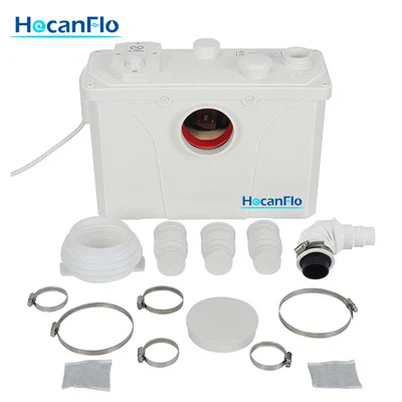
For instance, a Small Macerator Pump with a 300w motor, which is designed for relatively light - duty applications such as pumping domestic wastewater from a small bathroom or kitchen sink, may have a flow rate closer to the lower end of the range. These pumps are often more compact and may not be able to generate as much power as larger models.
On the other hand, a 300w Macerator Lifting Pump For Shower may have a slightly higher flow rate. Showers produce a relatively large volume of water in a short period, so the pump needs to be able to handle this flow. The design of these pumps is optimized to provide a better balance between power consumption and flow rate to meet the requirements of shower drainage.
A 300W Macerator Sewerage Sewage Pump is usually more robust and can handle a wider range of sewage types. It may have a flow rate that is closer to the upper end of the typical range, especially when the head pressure is relatively low.
Importance of Choosing the Right Flow Rate
Selecting a 300w sewage pump with the appropriate flow rate is essential for the proper functioning of your sewage system.
If the flow rate is too low, the pump will not be able to keep up with the volume of sewage being generated. This can lead to backups, flooding, and potential damage to your property. For example, in a commercial kitchen where large amounts of wastewater are produced during peak hours, a pump with a low flow rate will quickly become overwhelmed.
Conversely, if the flow rate is too high, the pump may be more expensive to operate and may not be necessary for your application. It can also cause excessive wear and tear on the pump components, reducing its lifespan.
How to Determine the Right Flow Rate for Your Needs
To determine the right flow rate for your sewage pump, you need to consider the following:
1. Volume of Sewage
Estimate the maximum volume of sewage that will be generated in a given period. For a residential property, this can be based on the number of fixtures (toilets, sinks, showers) and their usage patterns. In a commercial setting, you need to take into account the nature of the business and the peak hours of operation.
2. Head Pressure
Measure the vertical distance the sewage needs to be lifted and the length and diameter of the pipes. Use this information to calculate the head pressure. You can then refer to the pump's performance curve, which shows the relationship between flow rate and head pressure, to select a pump that can provide the required flow rate at the given head pressure.
Conclusion
As a 300w sewage pump supplier, I understand the importance of providing customers with pumps that meet their specific needs. The flow rate of a 300w sewage pump is a critical factor that depends on various elements such as pump design, head pressure, and the viscosity of the sewage. By carefully considering these factors and determining the right flow rate for your application, you can ensure the efficient and reliable operation of your sewage system.
If you are in the market for a 300w sewage pump and need more information on flow rates or any other technical aspects, feel free to contact us for a detailed discussion. We are here to help you make the best choice for your sewage management needs.
References
- "Pump Handbook" by Igor J. Karassik et al.
- Technical manuals of various 300w sewage pump manufacturers.