What is the flow rate of a 700w Macerator Pump?
Leave a message

The flow rate of a 700w macerator pump is a crucial parameter that determines its efficiency and suitability for various applications. As a supplier of 700w macerator pumps, I understand the importance of providing accurate information about this specification to our customers. In this blog post, I will delve into the factors that influence the flow rate of a 700w macerator pump, how to calculate it, and its significance in different scenarios.
Understanding Macerator Pumps
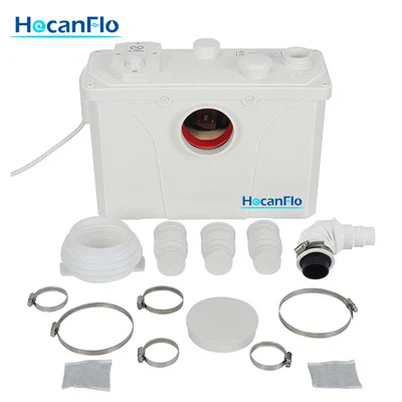
Before we discuss the flow rate, it's essential to understand what a macerator pump is and how it works. A macerator pump is a type of pump that is designed to grind solid waste into small particles before pumping it through a discharge pipe. This is particularly useful in applications where the waste needs to be transported over long distances or through small-diameter pipes. Macerator pumps are commonly used in sewage systems, marine applications, and RVs.
Our 700w macerator pumps are known for their robust construction and high-performance capabilities. They are equipped with sharp blades that can effectively macerate solid waste, such as toilet paper, sanitary products, and food scraps, into fine particles. This ensures smooth and efficient pumping, reducing the risk of blockages in the pipes.
Factors Affecting the Flow Rate
The flow rate of a 700w macerator pump is influenced by several factors, including:
- Head Pressure: Head pressure refers to the vertical distance that the pump needs to lift the waste. The higher the head pressure, the lower the flow rate. This is because the pump has to work harder to overcome the gravitational force and push the waste upwards. For example, if the waste needs to be pumped to a higher floor or over a long distance, the flow rate will be reduced.
- Pipe Diameter: The diameter of the discharge pipe also affects the flow rate. A smaller pipe diameter will result in higher resistance to the flow of waste, reducing the flow rate. On the other hand, a larger pipe diameter will allow for a smoother flow of waste, increasing the flow rate. It's important to choose the right pipe diameter based on the specific requirements of the application.
- Viscosity of the Waste: The viscosity of the waste being pumped can also impact the flow rate. Waste that is more viscous, such as thick sludge or grease, will require more energy to pump, resulting in a lower flow rate. In contrast, waste that is less viscous, such as water or diluted sewage, will flow more easily, allowing for a higher flow rate.
- Pump Efficiency: The efficiency of the pump itself plays a significant role in determining the flow rate. A more efficient pump will be able to convert more of the electrical energy into mechanical energy, resulting in a higher flow rate. Our 700w macerator pumps are designed with high-efficiency motors and advanced impeller designs to ensure optimal performance.
Calculating the Flow Rate
The flow rate of a 700w macerator pump can be calculated using the following formula:
Flow Rate (GPM) = (Power (Watts) x Efficiency) / (Head Pressure (ft) x Specific Gravity x 3960)
Where:
- GPM stands for gallons per minute
- Power is the power rating of the pump in watts (in this case, 700w)
- Efficiency is the efficiency of the pump, expressed as a decimal (usually between 0.5 and 0.8)
- Head Pressure is the vertical distance that the pump needs to lift the waste in feet
- Specific Gravity is the ratio of the density of the waste to the density of water (usually around 1 for sewage)
Let's assume that we have a 700w macerator pump with an efficiency of 0.7, and it needs to lift the waste to a height of 10 feet. Using the formula, we can calculate the flow rate as follows:


Flow Rate (GPM) = (700 x 0.7) / (10 x 1 x 3960)
Flow Rate (GPM) = 490 / 39600
Flow Rate (GPM) ≈ 0.0124 GPM
It's important to note that this is just a theoretical calculation, and the actual flow rate may vary depending on the factors mentioned above.
Significance of the Flow Rate
The flow rate of a 700w macerator pump is an important consideration when choosing a pump for a specific application. Here are some scenarios where the flow rate plays a crucial role:
- Sewage Systems: In sewage systems, the flow rate determines how quickly the waste can be removed from the building and transported to the treatment facility. A higher flow rate is desirable to ensure that the sewage does not back up into the building. Our 700w macerator pumps are suitable for small to medium-sized sewage systems, providing a sufficient flow rate to handle the waste generated.
- Marine Applications: On boats and yachts, the flow rate of the macerator pump is essential for maintaining a clean and odor-free environment. A higher flow rate allows for faster removal of sewage from the holding tank, reducing the risk of overflow and unpleasant odors. Our 700w macerator pumps are designed to withstand the harsh marine environment and provide reliable performance.
- RVs: In recreational vehicles (RVs), the flow rate of the macerator pump determines how quickly the waste can be emptied from the holding tank. A higher flow rate means less time spent waiting for the tank to empty, allowing for a more convenient and enjoyable camping experience. Our 700w macerator pumps are compact and lightweight, making them ideal for RV applications.
Related Products
In addition to our 700w macerator pumps, we also offer a range of related products, including Septic Grinder Pump, Submersible Grinder Pump, and 120v Shower Pump. These products are designed to work together to provide a comprehensive solution for your sewage and water pumping needs.
Contact Us for Procurement
If you are interested in purchasing our 700w macerator pumps or any of our related products, please feel free to contact us for more information. Our team of experts will be happy to assist you in choosing the right pump for your specific application and provide you with a competitive quote. We are committed to providing high-quality products and excellent customer service, and we look forward to working with you.
References
- "Pump Handbook" by Igor J. Karassik, Joseph P. Messina, Paul Cooper, and Charles C. Heald
- "Fluid Mechanics" by Frank M. White