What treatment is required for using a 120v Macerator Pump with industrial wastewater?
Leave a message

When it comes to dealing with industrial wastewater, the proper use of equipment is crucial. As a supplier of 120v Macerator Pumps, I often encounter questions regarding the appropriate treatment when using these pumps with industrial wastewater. In this blog post, I'll delve into the various treatment requirements and processes that are essential for ensuring the efficient and safe operation of a 120v Macerator Pump in an industrial wastewater context.
Understanding Industrial Wastewater
Industrial wastewater is a complex mixture of pollutants, chemicals, and solid materials. The composition of industrial wastewater can vary significantly depending on the type of industry. For example, manufacturing plants may produce wastewater containing heavy metals, oils, and grease, while food processing industries may have high levels of organic matter such as fats, oils, and proteins. Understanding the specific characteristics of the industrial wastewater is the first step in determining the appropriate treatment.
Role of a 120v Macerator Pump
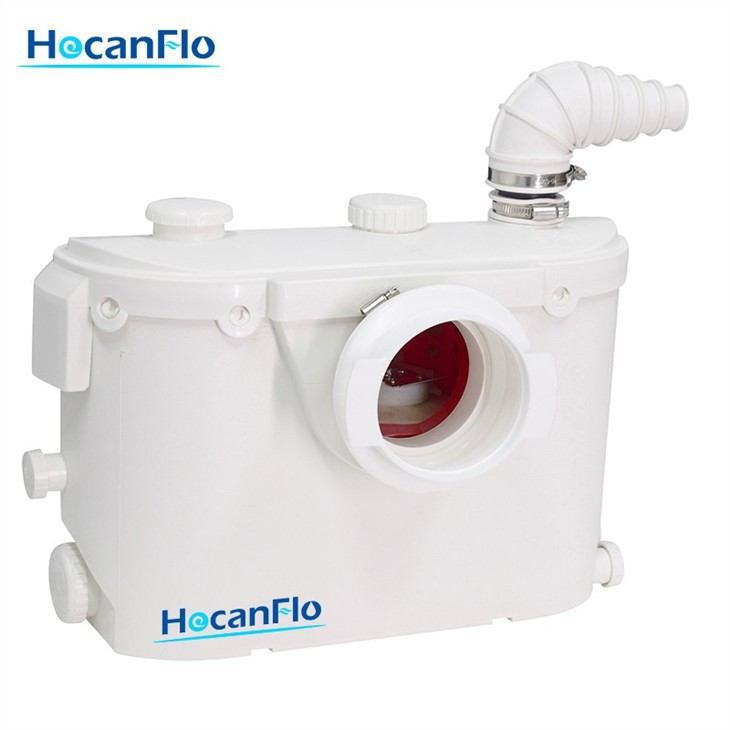
A 120v Macerator Pump is designed to grind and pump wastewater. It is particularly useful in situations where the wastewater contains solid materials that could clog traditional pumps. The macerator pump uses rotating blades to break down solid waste into smaller particles, making it easier to pump through the system. However, while the macerator pump can handle solid materials, it is not a substitute for proper wastewater treatment.

Pretreatment
Before the industrial wastewater reaches the 120v Macerator Pump, it is often necessary to perform some form of pretreatment. Pretreatment helps to remove large debris and reduce the load on the macerator pump. One common pretreatment method is screening. Screening involves passing the wastewater through a series of screens with different mesh sizes to remove large objects such as sticks, rocks, and plastic.
Another important pretreatment step is sedimentation. Sedimentation tanks are used to allow heavy solids to settle to the bottom of the tank. This helps to reduce the amount of solid material that the macerator pump needs to handle. By reducing the solid load, the macerator pump can operate more efficiently and have a longer lifespan.
Chemical Treatment
In addition to physical pretreatment, chemical treatment may also be required. Chemical treatment can be used to neutralize the pH of the wastewater, remove heavy metals, and break down organic matter. For example, if the industrial wastewater is highly acidic or alkaline, chemicals such as lime or sulfuric acid can be added to adjust the pH to a more neutral level.
Coagulation and flocculation are also common chemical treatment processes. Coagulants are chemicals that are added to the wastewater to neutralize the electrical charges on the particles, causing them to clump together. Flocculants are then added to further aggregate the clumps into larger particles that can be more easily removed.
Biological Treatment
Biological treatment is another important step in treating industrial wastewater. Biological treatment uses microorganisms to break down organic matter in the wastewater. There are two main types of biological treatment: aerobic and anaerobic.
Aerobic biological treatment involves the use of oxygen-loving microorganisms. These microorganisms break down the organic matter in the wastewater by using oxygen. Aerobic treatment is often used in situations where the wastewater has a relatively low concentration of organic matter.
Anaerobic biological treatment, on the other hand, uses microorganisms that can survive without oxygen. Anaerobic treatment is more suitable for wastewater with a high concentration of organic matter. Anaerobic treatment can also produce biogas, which can be used as a renewable energy source.
Post-Treatment
After the wastewater has been treated by the macerator pump and the various treatment processes, it may still require some form of post-treatment. Post-treatment is used to further polish the wastewater and ensure that it meets the required discharge standards. One common post-treatment method is filtration. Filtration involves passing the wastewater through a filter medium to remove any remaining solid particles.
Disinfection is also an important post-treatment step. Disinfection is used to kill any remaining pathogens in the wastewater. Common disinfection methods include chlorination, ultraviolet (UV) disinfection, and ozonation.
Importance of Regular Maintenance
Regular maintenance of the 120v Macerator Pump is essential for ensuring its proper operation. This includes checking the blades for wear and tear, cleaning the pump regularly, and lubricating the moving parts. By performing regular maintenance, the macerator pump can operate more efficiently and have a longer lifespan.
Our Product Offerings
As a supplier of 120v Macerator Pumps, we offer a range of products to meet the diverse needs of our customers. Our 500w Sewerage Grinder Sewage Pump is designed for heavy-duty applications and can handle a large volume of wastewater. Our Macerator Pump For Full Bathroom is suitable for residential and commercial bathroom applications. And our 500w Sewage Macerator Pump For Basement is specifically designed for basement installations.
Conclusion
Using a 120v Macerator Pump with industrial wastewater requires a comprehensive treatment approach. Pretreatment, chemical treatment, biological treatment, and post-treatment are all important steps in ensuring the efficient and safe operation of the macerator pump. Regular maintenance of the pump is also essential. If you are in need of a 120v Macerator Pump for your industrial wastewater application, please feel free to contact us for more information and to discuss your specific requirements. We are committed to providing high-quality products and excellent customer service.
References
- Metcalf & Eddy. (2003). Wastewater Engineering: Treatment and Reuse. McGraw-Hill.
- Tchobanoglous, G., Burton, F. L., & Stensel, H. D. (2003). Wastewater Engineering: Treatment, Disposal, and Reuse. Pearson Education.